A geo-fenced AR campaign puts exclusive augmented reality content at a physical place: fans walk into a venue, scan a QR code, and unlock an experience that exists nowhere else on earth. No app download, no install friction, just a mobile browser. Augmento has built its platform around exactly this mechanic, combining geo-fenced WebAR with interactive digital content to drive fan engagement, collect first-party data, and generate measurable revenue for brands, artists and events. This playbook is the complete picture: how the technology works, the campaign formats available, which industries get the strongest results, what a launch timeline looks like, how success is measured, and what we learned shipping MOMENTUM with Victoria Fard at the World Economic Forum's AMNC26.

Geo-Fenced AR Campaigns: The Augmento Playbook
How brands, artists and events use geo-fenced WebAR to drive attendance, engagement and first-party data, with no app download.
What a geo-fenced AR campaign is (no app required)
Two technologies define the format. The first is geo-fencing: a virtual boundary drawn around a physical location using GPS coordinates. When a user enters the boundary, they can unlock exclusive AR content tied to that place. Location-gating creates scarcity, and scarcity increases perceived value: content fans can only get by showing up drives physical attendance.
The second is WebAR. Augmento's platform delivers AR through the mobile browser, so your audience never downloads an app. Users scan a QR code or tap a link and the experience loads instantly. Removing the app store from the journey removes the biggest friction point in AR adoption and dramatically increases participation. Compatibility is effectively universal: iOS (Safari 14.5+) and Android (Chrome 80+), covering approximately 95% of active mobile devices worldwide, with automatic quality scaling for older hardware.
The geo-fencing itself is precise enough for real venue design. Augmento combines GPS, Wi-Fi triangulation and cell tower data for accuracy down to approximately 5-10 meters outdoors, and integrates Bluetooth beacons for sub-meter precision indoors. Fences can be circles or custom polygons matched to venue layouts, and a single campaign can run as many zones as needed: a music festival can put different AR experiences at each stage, exclusive content in VIP areas, sponsor activations at specific booths, and a treasure hunt spanning the entire venue, each zone with its own content, unlock conditions and time windows.
Campaign formats: collectibles, scavenger hunts, filters, drops
Geo-fencing is the lock; the content behind it can take many shapes. The core formats Augmento supports:
- Marker-based AR: experiences triggered by scanning images, logos or products.
- Location-based AR: content geo-fenced to specific venues or areas.
- Surface-tracking AR: 3D objects placed on real-world surfaces around the user.
- Face filters and effects: shareable selfie content featuring artist or team branding.
- Immersive 360 AR environments: full digital worlds layered over physical space.
- AR games and scavenger hunts: competitive, gamified formats with challenges and leaderboards.
The format with the strongest retention mechanics is the AR collectible: a unique digital item (a 3D object, animation or card) that fans unlock by completing real-world actions, visiting a location, attending an event, or scanning a trigger. Digital drops are time-limited releases of these collectibles, adding urgency to the scarcity. Fans view their collection in a personal gallery, share it on social media, and in some campaigns trade or sell items. Think of it as digital memorabilia that proves you were there.
At live events, these formats combine into a digital layer that gives fans reasons to participate beyond watching: scavenger hunts across the venue, exclusive collectibles unlocked at specific locations, real-time AR leaderboards and challenges, behind-the-scenes content in VIP areas, and interactive voting through AR overlays. Campaigns typically see 40-65% engagement rates among attendees.
Industries and use cases
The playbook transfers across industries because the underlying loop, show up, unlock, share, is universal:
- Music & entertainment: concert exclusives, album drops, meet-and-greet AR.
- Sports: stadium experiences, player collectibles, fan zones.
- Retail & fashion: virtual try-ons and in-store activations.
- Real estate: AR property tours and off-plan maquettes that capture buyer intent before the showroom visit.
- Education: interactive learning experiences.
- Tourism: city exploration and museum guides.
- Brand marketing: product launches and experiential advertising.
The common denominator: any brand that wants to create memorable, shareable moments tied to a place benefits from the format.
Campaigns in the wild
Geo-fenced WebAR activations shipped on the Augmento platform, from WEF exhibitions to festivals, galleries and stadium fan experiences.
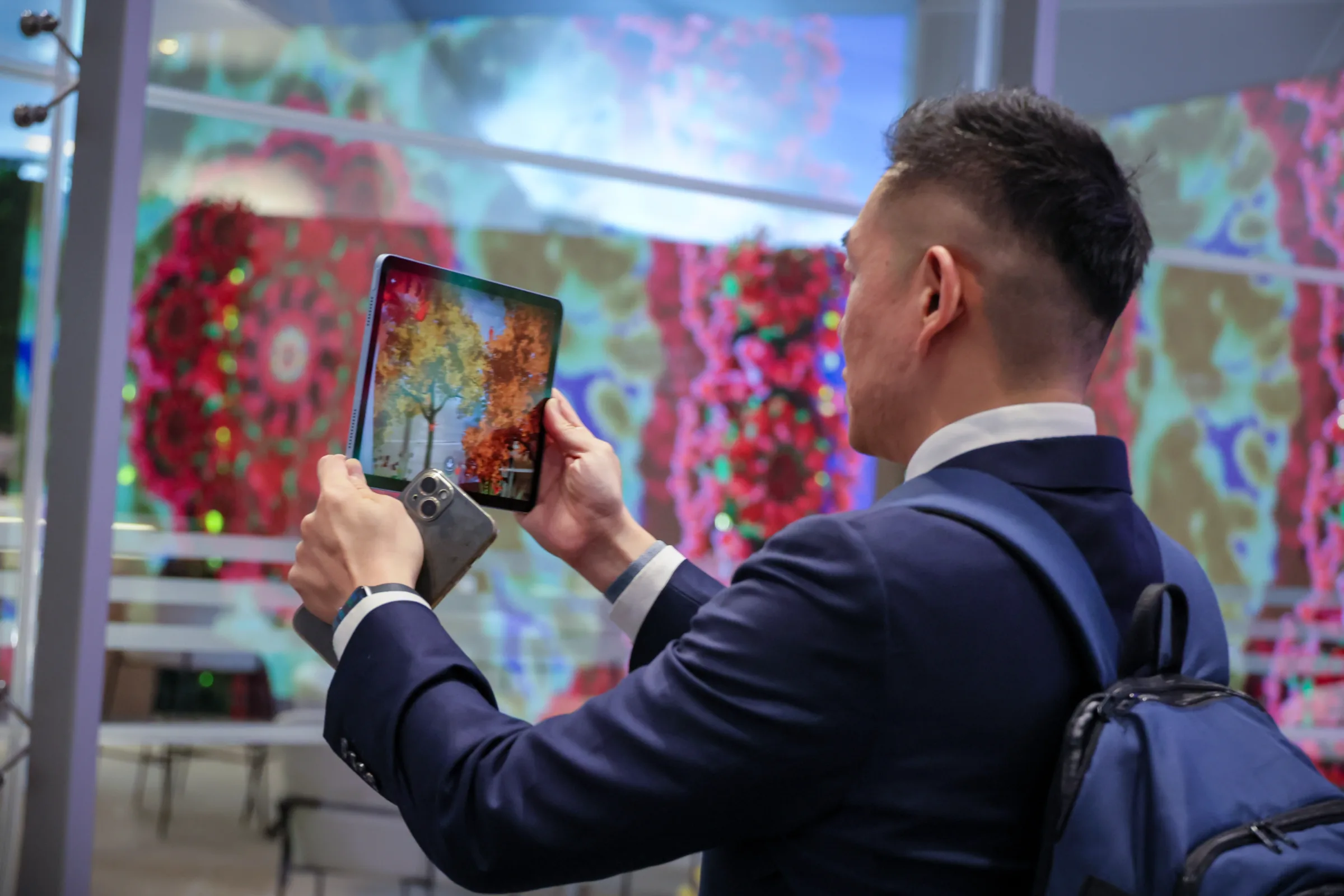
MOMENTUM by Victoria Fard at WEF AMNC26 in Dalian, an AR world visitors move through

Beyond the Frame: the spatial computing exhibition at AMNC26

Worlds Away Festival AR experience

Zanzibar AR art gallery experience
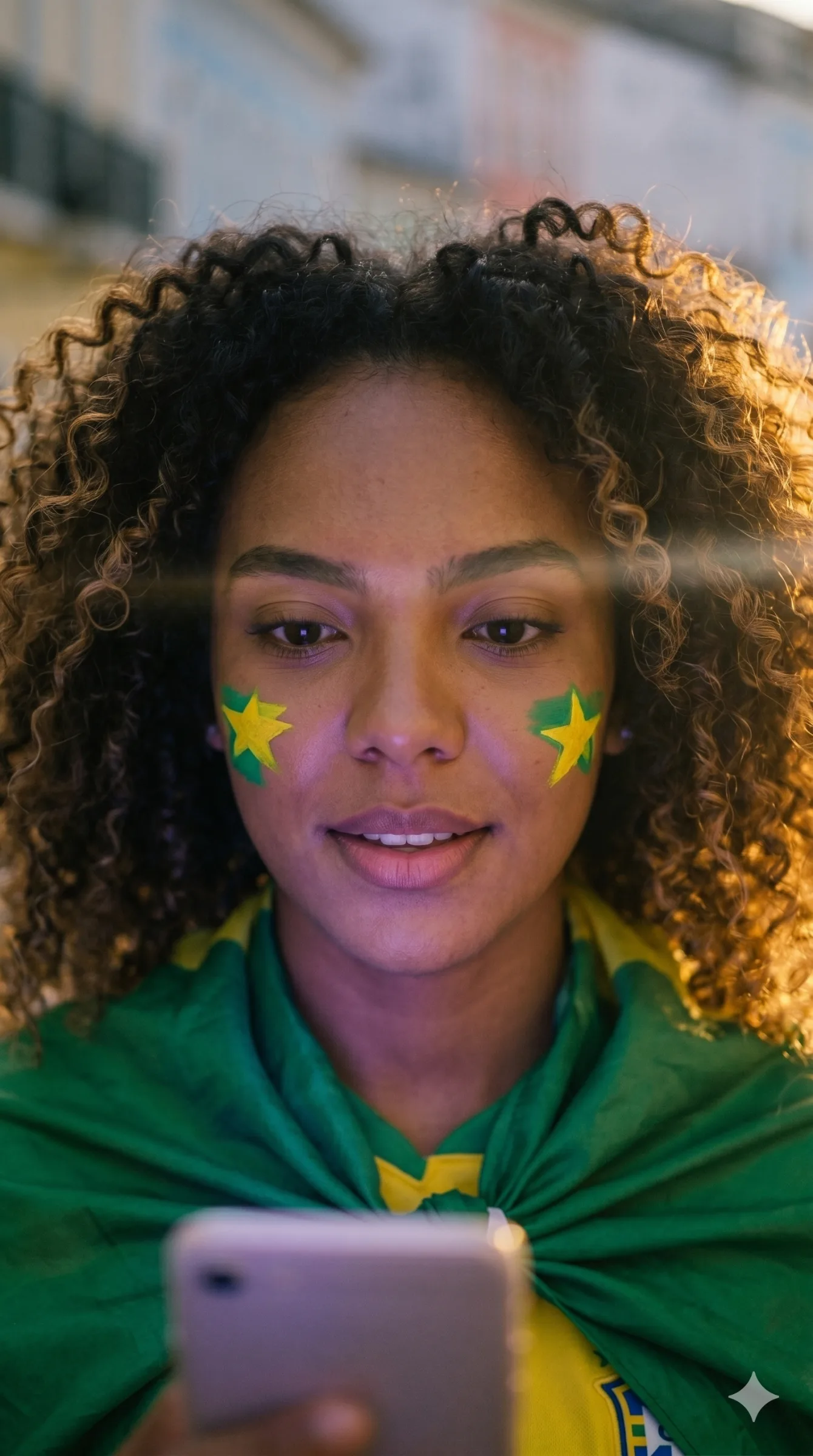
CBF geo-fenced AR fan activation

Miami Art Week AR activation
Timeline and process: brief to launch
The process from first call to live campaign has four steps: a discovery call to align on goals, a custom AR experience strategy designed for your audience, build and deployment by our team within your timeline, and launch with real-time engagement analytics in your dashboard. Most campaigns go from concept to live in under 4 weeks.
Timelines scale with complexity:
- Simple activations (image triggers, basic 3D models): 1-2 weeks.
- Standard campaigns (geo-fenced experiences, custom animations, gamification): 3-4 weeks.
- Enterprise deployments (multi-venue, complex integrations, custom 3D content): 6-8 weeks.
- Rapid-deployment templates for events on tight schedules: live in as little as 48 hours.
Content production is handled either way: if you have existing 3D assets we optimize and integrate them; if not, our in-house 3D artists and motion designers build custom models, animations and effects, typically in 1-3 weeks depending on complexity. A hybrid path upgrades existing brand assets (logos, products, mascots) into AR-ready 3D content.
One production note that matters for venues: connectivity. Augmento supports offline-capable AR through progressive caching. After the first load, 3D assets, textures and interaction logic are cached locally, and for venues with poor connectivity we pre-load assets via QR codes at entry points. Real-time features (analytics, leaderboards, social sharing) still need a connection.
Measuring it: analytics, ROI and first-party data
Every campaign runs on a real-time analytics dashboard: unique visitors and session counts, average engagement time per experience, heatmaps of where users interact most, geo-fence entry and exit tracking, conversion funnels from view to interact to share to purchase, device and browser breakdowns, social sharing metrics, and custom event tracking. Everything exports as CSV or connects to your BI tools via API.
On outcomes, the ROI benchmarks our clients typically see:
- 3-5x higher engagement rates compared to traditional digital ads.
- 40-65% participation rates at live events.
- 25-35% increase in social media mentions during AR campaigns.
- $55-105M in additive revenue per major music campaign.
- 2-4x longer dwell time at sponsored activations.
We provide an ROI calculator during onboarding, tailored to your goals and industry benchmarks.
The asset that outlasts the campaign is the audience itself. In a post-cookie world, first-party data is the point: fans willingly share their email, location preferences and behavioral data in return for exclusive AR content, through GDPR and CCPA compliant opt-in flows. The data is stored securely and owned entirely by you; Augmento never sells or shares your audience data. You end the campaign with direct relationships with your fans, not rented ones.
Integrations: ticketing, CRM and loyalty
AR campaigns compound when they plug into the systems you already run. Augmento integrates with major ticketing platforms (Ticketmaster, Eventbrite, AXS), CRM systems (Salesforce, HubSpot), loyalty programs, and social media APIs. In practice that enables:
- Ticket-gated content: AR experiences unlocked by ticket type, such as VIP-only content.
- CRM sync: engagement data flows into your CRM for follow-up campaigns.
- Loyalty mechanics: AR achievements linked to loyalty points.
The architecture is API-first, so custom integrations with proprietary systems are straightforward as well.
Case study: MOMENTUM with Victoria Fard at WEF AMNC26
MOMENTUM is an immersive, interactive AR world created by multidisciplinary artist Victoria Fard in partnership with the World Economic Forum and Augmento, showcased in the "Beyond the Frame" exhibition at the World Economic Forum's Annual Meeting of the New Champions (AMNC26) in Dalian. Its definition doubles as our product philosophy: "Art you do not just look at. Art you move through."
Fard is an immersive storyteller whose practice blends architecture, digital technologies and spatial experiences; drawing on a background in computational design and digital fabrication, she uses algorithmic processes and Augmento's platform to build immersive 3D worlds. MOMENTUM itself was inspired by the Lunar New Year and the arrival of the Year of the Horse: a meditation on renewal, transformation and purposeful movement, guided by the element of fire, its vibrant red palette embodying passion, courage and the driving force of transformation.
Technically, the installation shows what the platform does at full stretch. Augmento's spatial computing engine turned Fard's artwork into a living digital landscape that adapts to each participant's physical presence: visitors navigate the physical space to discover FLORIS, algorithmically generated floral forms that grow and evolve in real scale, surrounded by moving horses, floating lanterns, drifting clouds and butterflies that gather around participants, all set to a vibrant soundscape. Participation is active, not passive: using mobile devices like iPads, visitors choose 3D elements and place them directly into their physical surroundings, with no app download required. More productions like this live in our case studies.

Art you do not just look at. Art you move through.
Created by Victoria Fard in partnership with the World Economic Forum and Augmento for the Beyond the Frame exhibition in Dalian.
Start a campaign
Commercially, Augmento offers flexible pricing: project-based pricing for one-off campaigns with fixed scope, monthly retainers for ongoing AR experiences and content updates, revenue-share models for campaigns with direct monetization such as digital collectible sales, and enterprise agreements for large-scale multi-venue deployments. Pricing scales with the number of AR experiences, geo-fenced zones, custom 3D content, expected user volume, and integration requirements. High-traffic events are a solved problem: standard plans include generous traffic allowances, and for viral or large-scale events expecting 100K+ concurrent users we provision dedicated infrastructure, with no surprise overage charges.
Augmento is headquartered in Dubai with team members across Europe and Latin America, and deploys campaigns globally with multi-language support, international CDN delivery, and compliance with regional data regulations (GDPR, CCPA, LGPD). To scope your campaign, email hello@augmento.com or book a discovery call; most teams leave the first call with a format, a timeline and a measurement plan.
Quick answers
No. Augmento uses WebAR: experiences run directly in the mobile browser via a QR code or link, which removes the biggest friction point in AR adoption and dramatically increases participation rates.
Approximately 5-10 meters outdoors using GPS, Wi-Fi triangulation and cell tower data, and sub-meter indoors with Bluetooth beacon integration. Fences can be radius circles or custom polygons.
Yes, as many as needed: different experiences per stage, VIP-only content, sponsor booths and venue-wide hunts, each zone with its own content, unlock conditions and time windows.
Either side. Augmento optimizes and integrates your existing assets, or in-house 3D artists build custom models, animations and effects, typically within 1-3 weeks depending on complexity.
Simple activations take 1-2 weeks, standard geo-fenced campaigns 3-4 weeks, and enterprise deployments 6-8 weeks. Rapid-deployment templates can go live in as little as 48 hours.
Typical client benchmarks: 3-5x higher engagement than traditional digital ads, 40-65% participation at live events, 25-35% more social mentions during the campaign, 2-4x longer dwell time at activations, and $55-105M additive revenue per major music campaign.
Partially. Progressive caching stores assets locally after the first load, and assets can be pre-loaded via QR codes at entry points. Real-time analytics, leaderboards and social sharing need a connection.
You do, entirely. Collection runs through GDPR and CCPA compliant opt-in flows, and Augmento never sells or shares your audience data.
Campaigns in production
Start your geo-fenced AR campaign
Most teams leave the first call with a format, a timeline and a measurement plan. Simple activations launch in 1-2 weeks.